

A 17th-century shipwreck, called ‘Delta I’, was found in 2024 during dredging work in the port of Cádiz (Spain). It was carrying a lot of contraband. The Andalusian Centre for Underwater Archaeology’s team of archaeologists discovered half a tonne of silver ingots (18 pieces) from the territory of modern-day Bolivia and 27 Swedish cast-iron ‘Finbanker’ cannons of five different calibres on board. Because the trade in precious metals in Spain was strictly controlled and heavily taxed via Seville and Cadiz, the presence of silver and foreign weapons on board suggests that the trade was illegal. Scholars reckon the ship was built in France and later used by Dutch merchants. The finds date to the second half of the 17th century: one of the ingots is stamped with the year 1667, and a bronze bell bears the date 1671.
The sunken ship ‘Delta I’, which was discovered in 2024 off the coast of Cadiz in Spain, reveals new details about its cargo, which is over 300 years old. According to Cadiz Directo, the underwater archaeologists have found evidence that the ship was carrying Swedish cannons and silver ingots from what is now Bolivia, which suggests that there might have been some illicit trade going on along Europe’s Atlantic coast. This is what WP tech has said.
“We found the ship while we were dredging the area before they built the new terminal at the port of Cadiz, which is on the Atlantic coast in south-west Spain. Since then, a team from the Centre for Underwater Archaeology at the Andalusian Institute of Historical Heritage has been looking into the shipwreck.
The archaeologists knew right away that they were dealing with the remains of a 17th-century ship, but it wasn’t until they did more analysis that they could figure out what the cargo was actually made up of.
At the same time, we don’t know the ship’s original name. It was called ‘Delta I’ after it was found in 2024. Experts think the ship was built in France and was later used by Dutch merchants who got into the arms trade in the 17th century.
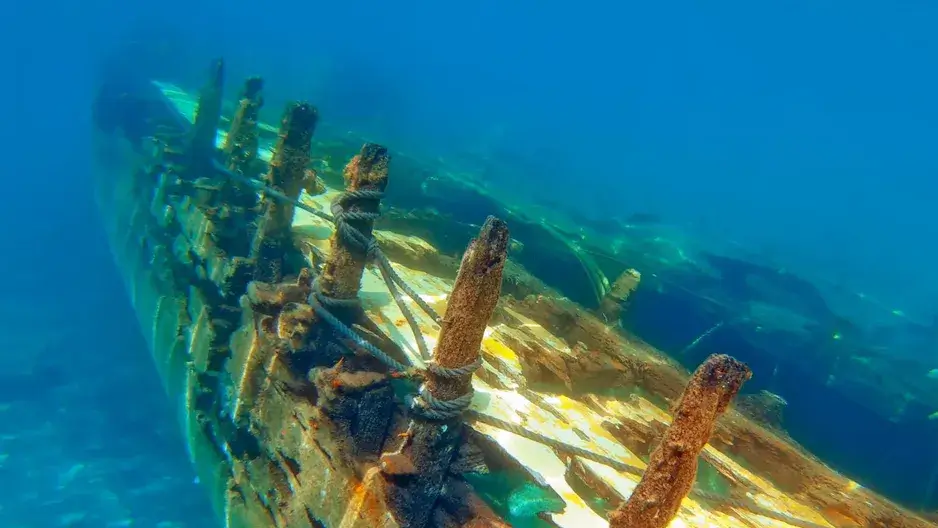
Cannons from Sweden and silver from Bolivia
They found 27 Swedish iron cannons of the ‘Finbanker’ type, a bronze bell of unknown origin and 18 silver ingots in the sunken ship. The bell had the inscription ‘Jesus, Mary and Joseph 1671’ on it, and the year 1667 was clearly stamped on one of the ingots. There were 18 of them, weighing in at half a tonne each.
The cannons themselves, though, are a mixed bunch. Scientists have identified five different calibres, and the state of preservation of the pieces varies a lot.
‘Some of them were incomplete or had damaged muzzles. Experts reckon the cannons might’ve been used as ballast or were damaged just before the ship sank. They might’ve been Swedish, but they could’ve previously been used as artillery for the French fleet,” the publication suggests.
Why do the researchers think it’s smuggling?
It’s the mix of silver and foreign cannons on the same ship that’s got them wondering. The authors of the study, which was presented at the CIANYS 2021 congress, say that trading in precious metals in Spain was strictly tax controlled.
‘Seville had the monopoly, but Cadiz was also doing the loading and unloading of galleons arriving from the Americas thanks to its natural conditions. That’s why the Bay of Cadiz could have been used for smuggling,” the publication noted.