
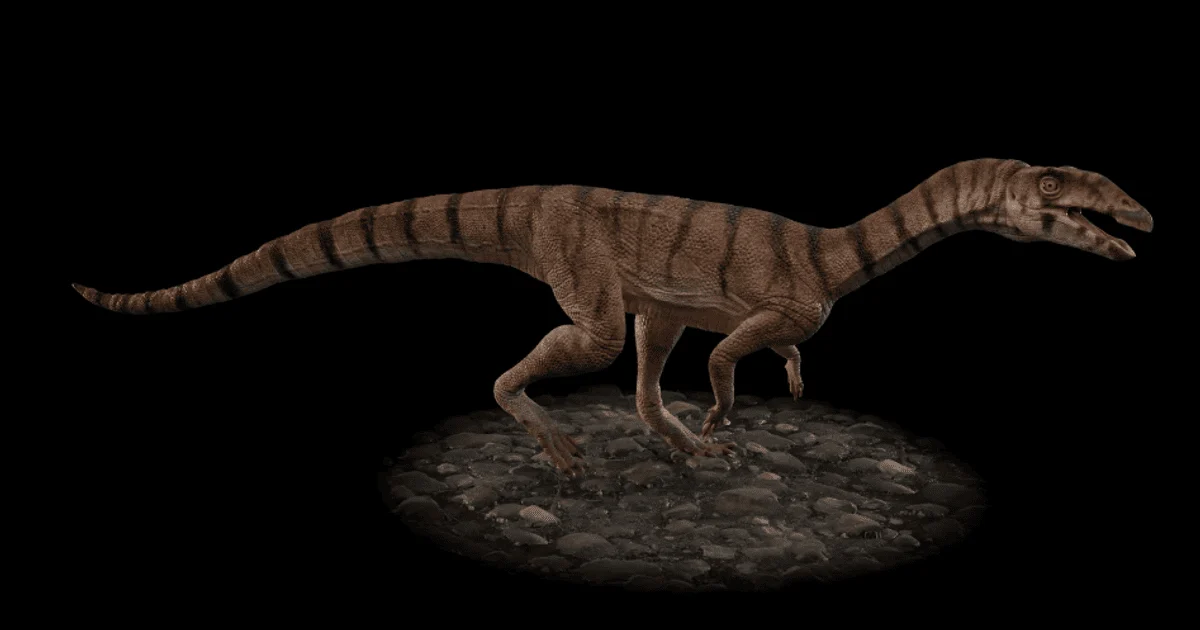

Scientists at the Los Angeles County Museum of Natural History have just described a new species of ancient crocodilian relative that lived 212 million years ago. They’ve called it Labrujasuchus expectatus, or the ‘witch crocodile’. This Triassic creature might look a bit different from what we expect, doesn’t it? It walked on two legs, had tiny front limbs and a toothless snout. It looked a bit like an ornithomimosaur dinosaur or an ostrich. The fossils were found in the Hayden Quarry at the famous Ghost Ranch in New Mexico. This discovery was a big deal for the study of shuvosaurids, showing how different groups of animals can evolve similar traits independently (like becoming bipedal and having a beak). The genus name refers to the historical name of the location (‘Witches’ Ranch’), whilst the species name expectatus means ‘expected’, as scientists had long predicted the existence of this intermediate link.
When you hear the word ‘crocodile’, you probably picture a massive four-legged reptile with a mouth full of teeth, basking on the riverbank. But 212 million years ago, one of the crocodile relatives looked quite different: it walked on two legs, had tiny front limbs and no teeth at all — instead, it had a beak. Palaeontologists have named this creature Labrujasuchus expectatus, or the ‘witch’s crocodile’.
The Los Angeles County Museum of Natural History has announced the discovery, and its researchers have described the new species.
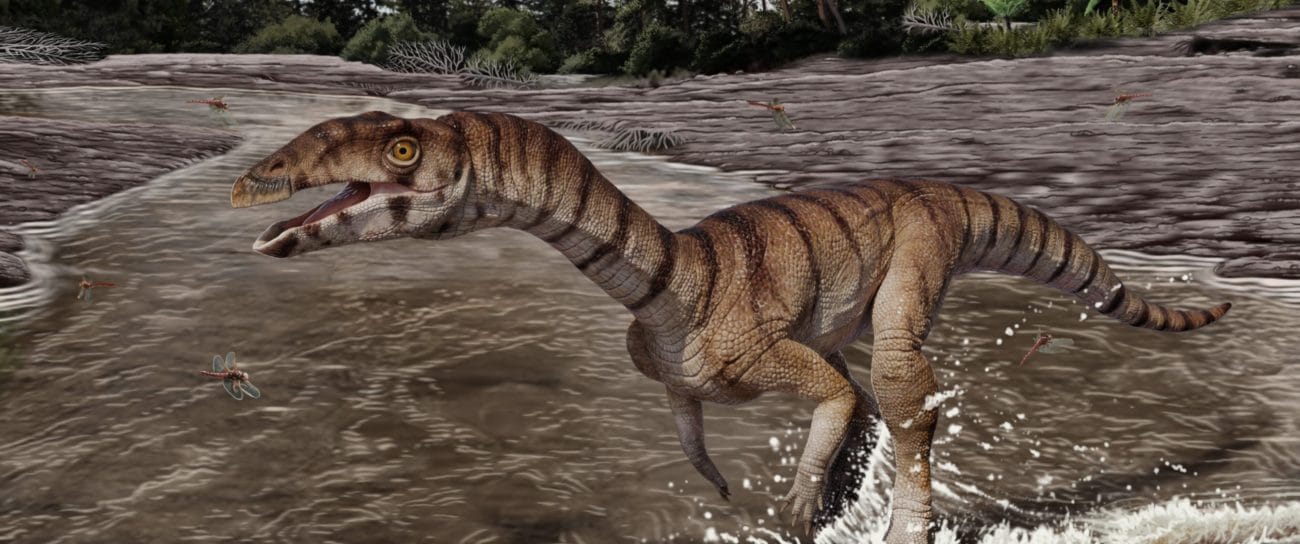
The crocodile that decided to become an ostrich
At first glance, Labrujasuchus looked like an ornithomimosaur dinosaur – those long-necked, two-legged lizards that look like ostriches. But actually, it belonged to the archosaur branch that gave rise to modern crocodiles. Researchers had already found remains of shuvosaurids in older and younger rock formations in this region, so there must have been an intermediate species between them. Labrujasuchus expectatus has filled exactly this predicted evolutionary gap.
This is called convergent evolution, which is when completely different animals independently arrive at similar solutions. The crocs and the dinosaurs ‘invented’ bipedalism, small forelimbs and a beak, each in their own way — and it worked both times.
‘We see how many successful strategies of modern animals and dinosaurs first appeared in the Triassic, and shuvosaurs are a great example of this. It’s pretty unusual for crocs to be two-legged, but dinosaurs and birds have been doing it for a long time,” said Dr Alan Turner, the study’s lead author.
‘Witches’ Ranch’ and its fossilised secrets
The remains of the ‘witch crocodile’ were found at Ghost Ranch in New Mexico — a place well known among both palaeontologists and art lovers. These bright red badlands inspired the artist Georgia O’Keeffe for her famous landscapes.
The genus name is actually a nod to a detective story. Local farmers apparently gave it the old Spanish name ‘Ranchos de los Brujos’ – ‘Witches’ Ranch’ – to stop outsiders finding out about the Archuleta brothers’ illegal cattle trade, explained the study’s co-author, Dr Nate Smith. Labrujasuchus combines this name with the Greek word ‘suchus’ – ‘crocodile’. The species name expectatus translates as ‘expected’ – the researchers were pretty sure an intermediate species would be found at some point.
This summer is the 20-year anniversary of Dr Smith’s team starting to do proper digs at the Hayden Quarry on Ghost Ranch. And the ranch has still not run out of surprises.
The Triassic – a time for weird experiments
Labrujasuchus is basically a crocodile in an ostrich’s outfit. But it was far from the only oddity of its time. The Triassic was also home to lagopetids — two-legged relatives of dinosaurs, whose descendants evolved into pterosaurs; the arboreal Drepanosaurus, with a single enormous claw and a prehensile tail; and Vancleavea — an armoured aquatic reptile resembling a miniature tank.
Labrujasuchus is only the fifth species of shuvosaurids that we know about – it’s one of the least studied groups of Triassic reptiles. Every new discovery here is really important because it helps us understand why nature keeps on using the same ‘architectural solutions’ – like being able to walk on two legs, having a beak and small forelimbs – even in completely different animals. It turns out that evolution knows no forbidden paths. Not even for the relatives of crocodiles.