
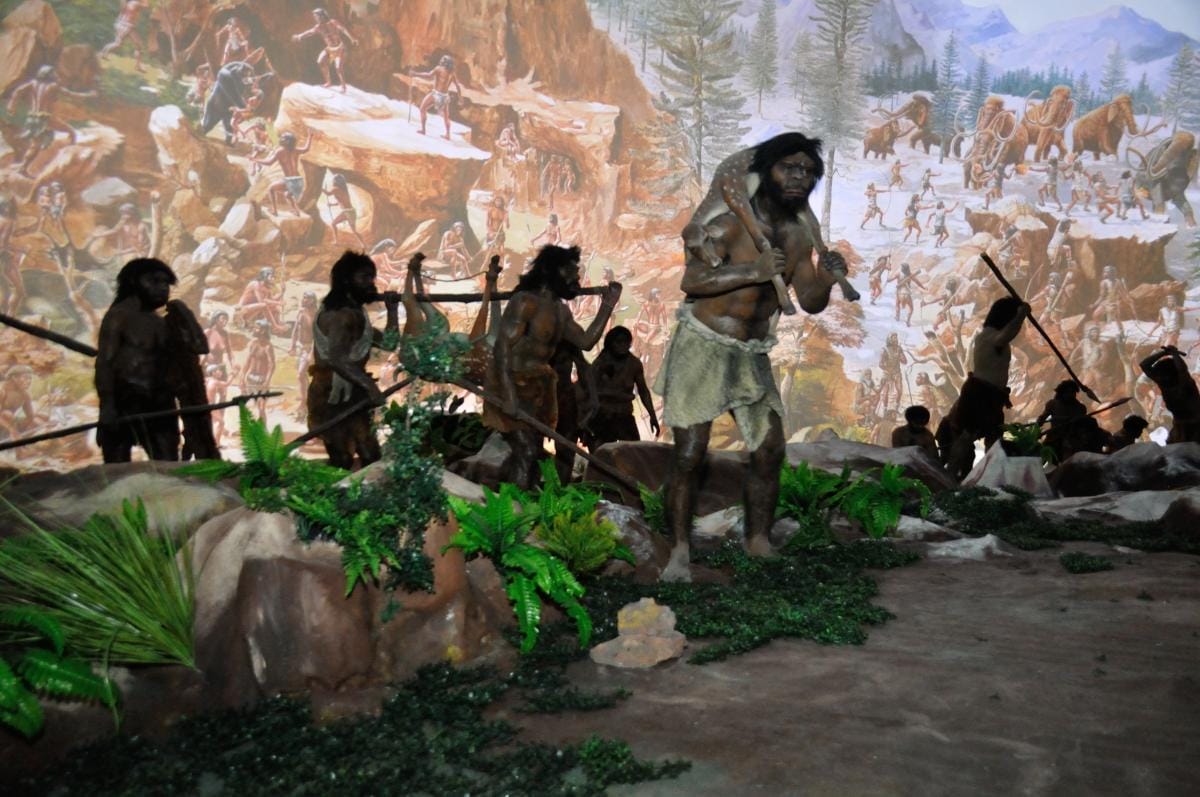

The human body has developed over four billion years, yet some of its anatomical features still baffle scientists. While we can easily trace the order in which most organs appeared along the evolutionary tree, the nature of certain features remains a mystery because of the lack of convergent evolution. For example, scientists point to the huge difference in the size of male reproductive organs in closely related primate species that are of a similar body weight (like colobus monkeys and macaques), which is usually explained solely by mating strategies and competition within the troop. It’s even more mysterious that the human chin is unique — it’s a bony structure that no other mammal has, not even Neanderthals. People think it might have started as a way to protect the jaw during combat, support the shape of the beard, or as a side effect of moving to soft, cooked food, but science hasn’t been able to prove any of these yet.
Our bodies are a complex system made up of different parts, from the tiny details of our cells to our limbs, eyes, liver and brain. All these parts have gradually developed over the last four billion years. But scientists can’t quite figure out why we evolved to look the way we do. The Independent has a piece on it.
“The history of evolution tells us how, starting from simple beginnings, each species took shape as individual components that make up a living being were added to its ‘blueprint’. If we look at how life has evolved, we can see a path that’s been winding its way through all these different specialised branches, and at the end of each one is a different species. For example, we humans were animals before we became vertebrates; mammals before we evolved into primates, and so on,” the article explains.
It’s interesting that the groups of species with which we share each of these branches show the order in which the parts of the human body appeared.
The body and intestines (which are features of the animal branch) must have appeared before the spine and limbs (which are features of the vertebrate branch); milk and fur (which are features of mammals) appeared before nails (which are features of primates).
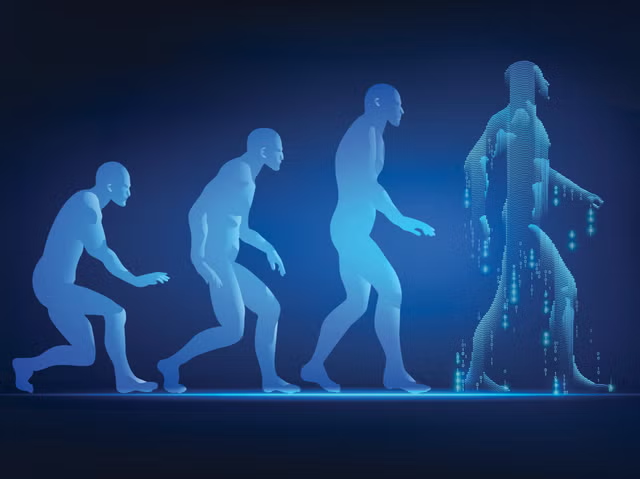
Researchers are still trying to work out why the size of a man’s testicles varies so much between different species.
“Adult males of the black-and-white Abyssinian colobus and bonnet macaques are pretty much the same size. But, as with chimps, humans and gorillas, the testicles of these similar monkeys can differ significantly in size. Colobus testicles weigh just 3 grams. On the other hand, macaque testicles can weigh up to 48 grams,” says The Independent.
Scientists say that big balls are like a peacock’s tail – not useful, but a nice-looking feature.
“But the most likely explanation is probably how they mate. The male colobus competes fiercely for access to a harem of females who will only mate with him. Macaques, on the other hand, live in mixed troops of around 30 monkeys and have a different approach to love, where everyone mates with everyone else: males with several females (polygamy), and females with several males (polyandry),” the publication explained.
And what about the human chin?
The human chin has been a hot topic among scientists for a while. Researchers reckon it might have evolved to strengthen the jaw of cavemen during fights.
It’s likely that the chin evolved to emphasise the grandeur of the male beard. It might even have been a by-product of the invention of cooking and the softer food it provided.
“It’s interesting, though, that the chin is not found in any other mammal, not even in our closest relatives, the Neanderthals. Because the human chin is so unique, there are lots of possible explanations for what it was used for in evolution, but without convergent evolution, there’s no way to test them. Some things about human nature might always be a mystery,” the article said.