
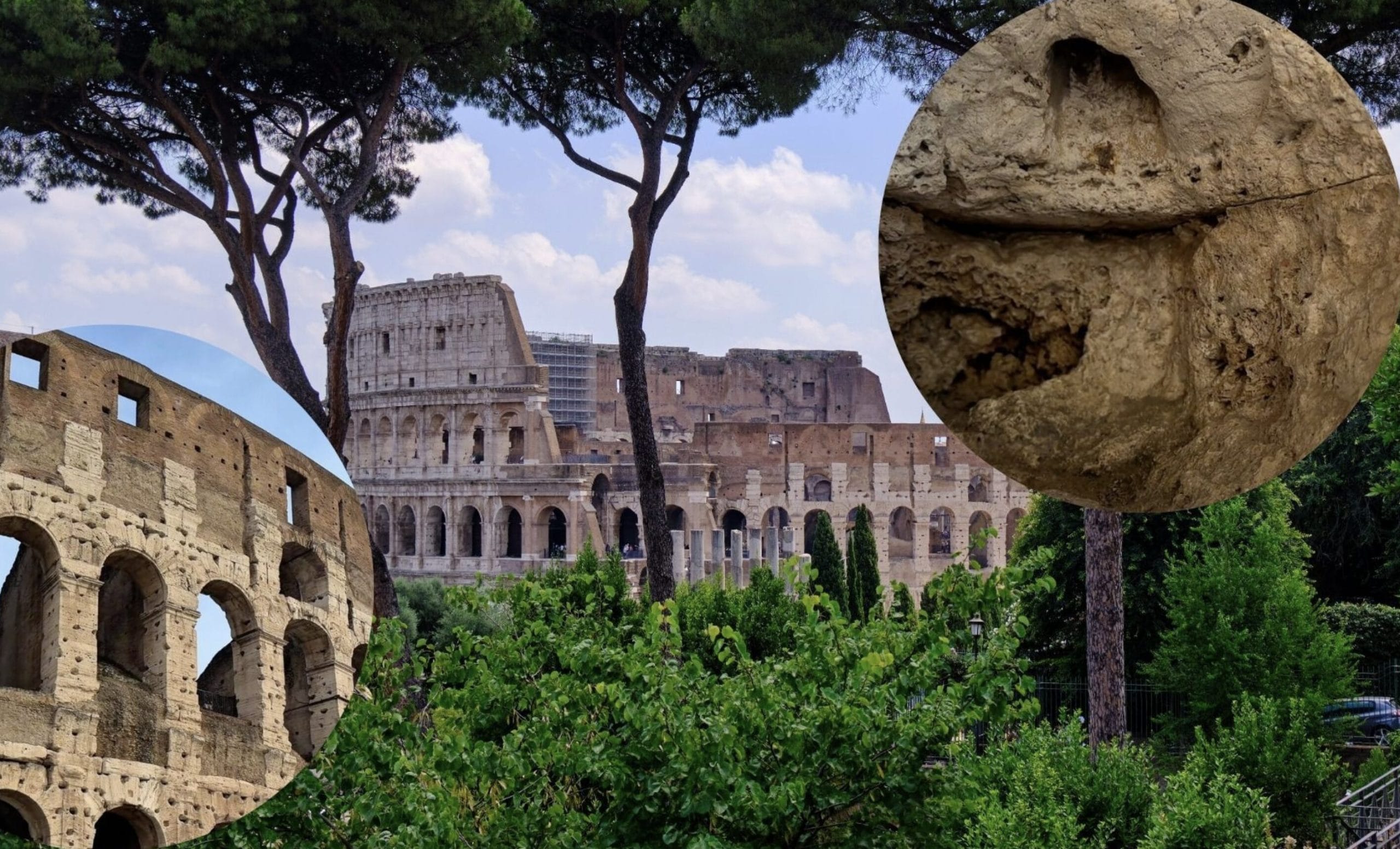

The thousands of holes in the walls of Rome’s Colosseum were not caused by bullets or cannons, but by metal mining in the Middle Ages. When the amphitheatre was being built between 70 and 80 AD, about 300 tonnes of iron staples and pins were used to hold together the travertine blocks. When Rome fell into poverty in the Middle Ages, iron became very valuable. Local people removed the metal fasteners from the structure to make weapons, bells and other items. This made the building weaker and more likely to be damaged in an earthquake.
The Colosseum in Rome is one of the most famous monuments of the ancient world, attracting millions of tourists every year. Many of them notice a strange feature that they cannot explain. The walls of the amphitheatre are covered in thousands of holes of all sizes. But where did they come from? If you want to know more, go to romasegreta.it.
The Colosseum has thousands of holes. Why is the ancient amphitheatre like a piece of Swiss cheese?
When the Colosseum was built between 70 and 80 AD, Roman architects used huge blocks of travertine, a limestone rock. To hold these heavy blocks together without using mortar, the builders used iron staples and pins.
The technology used was as follows: a hole was made in the upper block, then in the lower block, and then metal was poured in. This made the blocks stick together tightly. About 300 tonnes of iron fasteners were used to build the Colosseum.
In the Middle Ages, Rome became a poor city. Iron became very valuable because there were no factories or craftsmen to make it. Iron became very valuable because people inside the city walls needed it to make weapons.
So, metal started to be taken out of the Colosseum and other old Roman buildings. People made holes in the places where the travertine blocks were joined to get the iron fastenings. The iron that was removed was melted down to make church bells, weapons, gates, doors and so on.
When these iron fasteners were removed, the holes that we see today were left behind. At first, they were hidden under a layer of marble that decorated the Colosseum. But when the decoration was removed, you could see the holes. The Colosseum became much more at risk of earthquakes.
There are still a lot of rumours about these holes in the Colosseum. Some people think they started after the bombings of World War II, as funweek.it says. Others look into history more deeply and say that the Visigoths caused the damage when they invaded in the 5th century. They say that the barbarians tried to destroy the amphitheatre, which would symbolise the fall of Rome.