
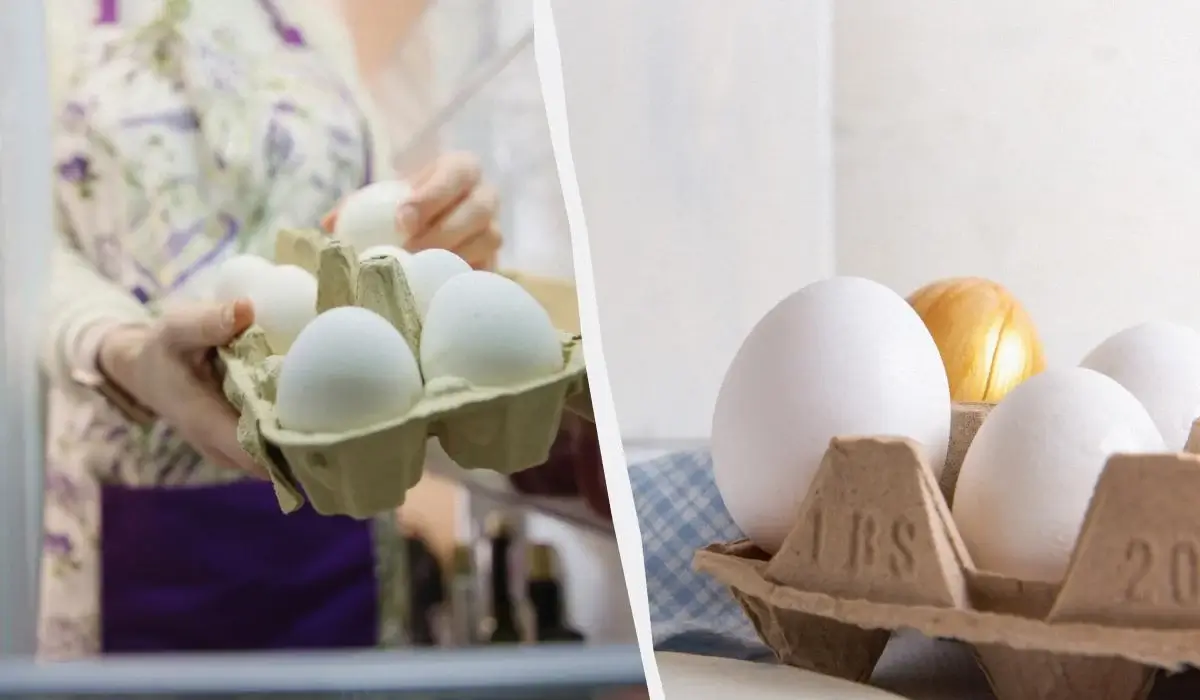

Freezing is the best way to store eggs long-term, keeping them fresh for up to four months (whereas in the fridge they’d only be good for one month). The experts all say it’s a big no-no to freeze eggs in their shells, as this can crack the shells because the liquid expands. Instead, crack the eggs into a container and beat them until the white and yolk are all mixed together and nice and smooth. This stops them from going too thick. It’s best to defrost the egg mixture in advance, either in the fridge or under cold running water. Then you can measure out the portions for omelettes or baking, at a rate of 50–55 grams per egg, using a scale.
Most of us are used to storing eggs in the fridge, but they do go off there over time, and there’s no question of keeping large quantities of the product for long. But British experts have come up with a pretty unusual way to keep eggs fresh for around four months.
How to store eggs for a long time – a useful life hack
You might have heard that you can’t freeze eggs, but you’d be surprised to know that you can. Actually, you can keep it fresh in the freezer for up to four months, but in the fridge it’ll last just over a month.
But before you freeze your eggs, there are a few things you need to do first, as the British tabloid Express explains.
How do you store eggs in the freezer?
The first thing to remember is that you shouldn’t freeze eggs in their shells. If you do, the contents of the egg will expand when it’s cold, and the shell will crack.
Here’s what you need to do:
- Crack the eggs into a container that’s the right size.
- Whisk them until they’re all mixed together. If you don’t, the white and yolk will thicken up when you freeze them, and they won’t be good for recipes.
- When you’re ready to use the mixture, take it out of the freezer in the evening and let it defrost in the fridge.
You can speed up the defrosting process by running cold water over the container with the frozen egg mixture.
Once defrosted, you can use the eggs as you normally would – for omelettes, baking or preparing other dishes. You can measure out the required amount of egg mixture using simple kitchen scales – a single C1-grade egg weighs 50–55 g.
Experts say this freezing trick is particularly useful if you have beaten an egg but only need to use a small amount of it – for example, to glaze baked goods.